- English
- Türkçe
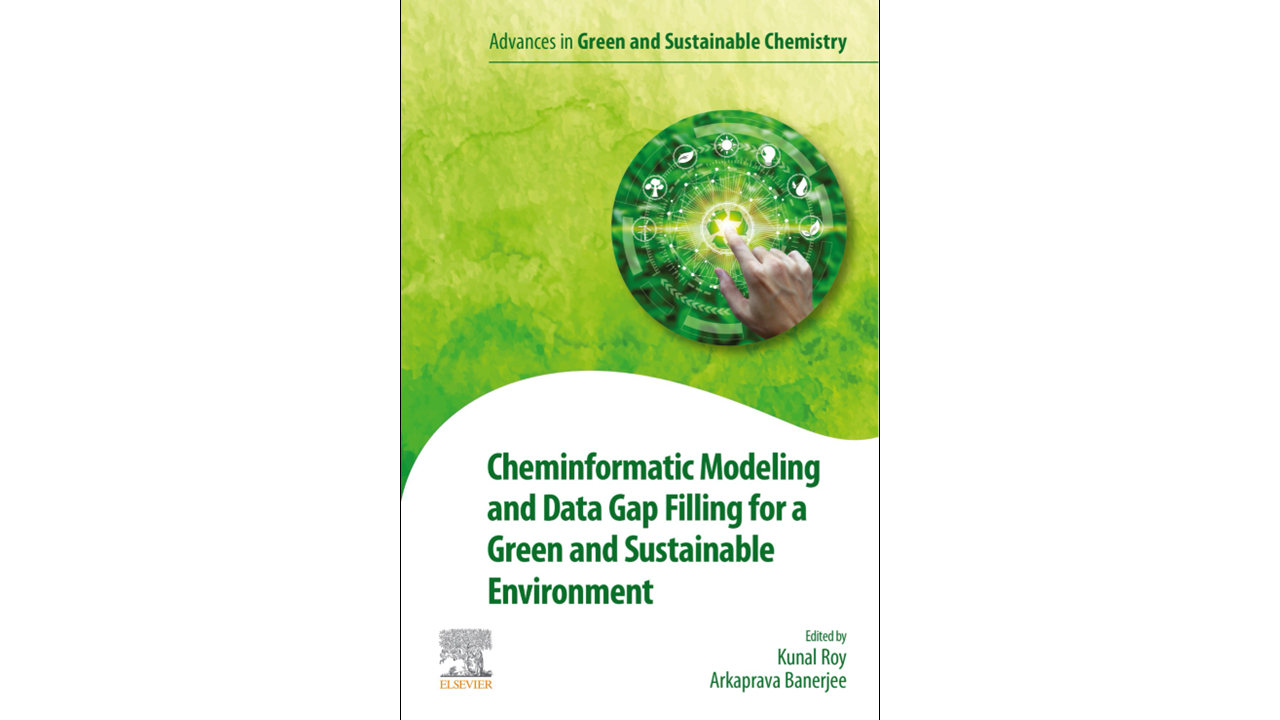
Two new book chapters in the Elsevier book Cheminformatic Modeling and Data Gap Filling for a Green and Sustainable Environment
Tuesday, June 16, 2026
Melek Türker Saçan from the Ecotoxicology and Chemometrics Lab at Boğaziçi University, Institute of Environmental Sciences, authored two book chapters published in the Elsevier book Cheminformatic Modeling and Data Gap Filling for a Green and Sustainable Environment, edited by Kunal Roy and Arkaprava Banerjee; with Béla Török and Timothy Dransfield serving as series editors.
Together with the PhD Student Suat Vardar, they authored the chapter “Quantitative structure– property relationship modeling of adsorption capacity of microplastics”. This chapter provides a comprehensive review of Quantitative Structure–Property Relationship (QSPR) models used to predict the adsorption of organic pollutants onto microplastics (MPs). This study evaluates in silico (computer-based) methods, specifically QSPR models, to quantify the interactions between organic chemicals and MPs. The review categorizes existing research into multivariate linear regression (MLR) and advanced Machine Learning (ML) algorithms, such as Artificial Neural Networks and Random Forests, to predict how pollutants behave in the environment. By examining molecular descriptors-like Abraham LSER parameters and quantum chemical indices-alongside environmental factors such as pH, salinity, and polymer aging, the study elucidates how MPs act as vectors for hazardous substances, including pesticides and pharmaceuticals.
The importance of these models lies in their efficiency; determining adsorption coefficients (Kd) through laboratory experiments is extremely resource-intensive, whereas QSPR offers a rapid, cost-effective alternative. With over 350,000 registered chemicals globally, these models are essential for filling massive data gaps regarding untested or newly introduced compounds. Understanding these interactions is vital for ecological risk assessments, as MPs facilitate the transport and bioaccumulation of toxic pollutants throughout the food chain, ultimately impacting human health. Furthermore, the review ensures standardization by analyzing models based on OECD principles, standard for transparency and reproducibility. Ultimately, the study provides a strategic roadmap for using predictive modeling to manage the complex environmental challenges posed by plastic pollution.
In a second chapter, “Computational Modeling of Aquatic Toxicity of Nanoparticles”, authored together with Natalja Fjodorova and Gülçin Tuğcu, the authors present a multidisciplinary framework that integrates the physicochemical properties of nanoparticles with the dynamics of aquatic environments. The work was supported by the Scientific and Technological Research Council of Turkey (TÜBİTAK; Grant No. 119N567). It highlights the latest advancements in Artificial Intelligence (AI) and ML, such as Random Forest and Support Vector Machines, to assess risks to aquatic ecosystems and human health offer high-throughput, cost-effective alternatives to traditional animal testing for assessing environmental risks. It involves simulating interactions between chemicals and aquatic organisms to understand mechanisms such as oxidative stress and bioaccumulation, providing high-throughput screening that is more efficient than traditional experimental methods. With over 11,000 nanotechnology products in the global market, the release of NPs into ecosystems poses significant risks to human health and the environment. This research is vital for environmental science because it contributes to sustainable nanotechnology development and supports regulatory frameworks like the European Union’s REACH to assess risks to aquatic ecosystems and human health.
Further information on the book Cheminformatic Modeling and Data Gap Filling for a Green and Sustainable Environment is available at the following link. https://shop.elsevier.com/books/cheminformatic-modeling-and-data-gap-fil...